Research-use-only context. This article summarizes published third-party scientific literature and laboratory practice. It is not medical advice, not a therapeutic or performance claim, and not a usage guide. US Prime Peptides products are supplied strictly for in vitro laboratory research and are not for human or veterinary use.
A research peptide order spends somewhere between one and three days inside a carrier network before it reaches a laboratory bench, and what happens to it during that time is decided at the packing station. This article walks through how an order is picked, verified against its certificate, protected, labeled, and handed to a carrier; what the carrier's own temperature guidance says; how long transit takes; and what to check in the first ten minutes after the box arrives.
The short answer: a lyophilized vial travels as a dry solid inside a padded, plain carton
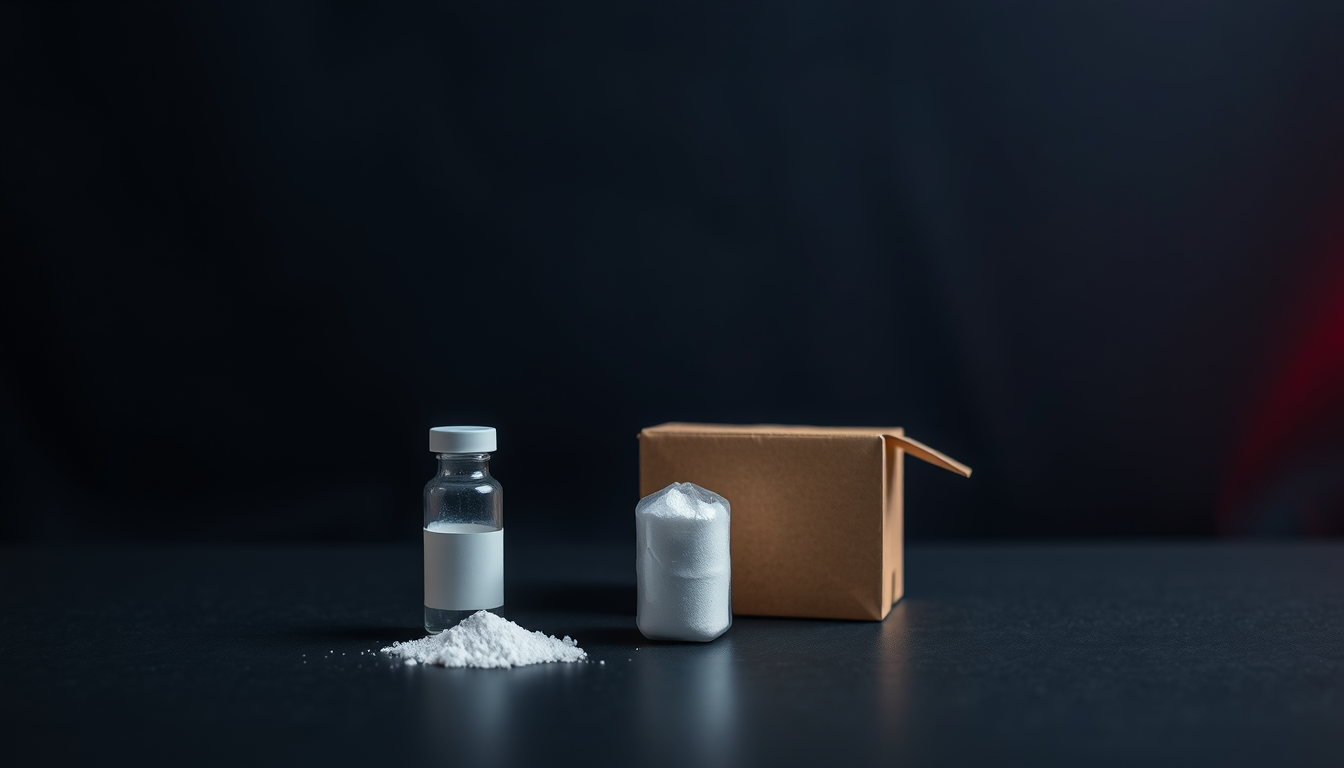
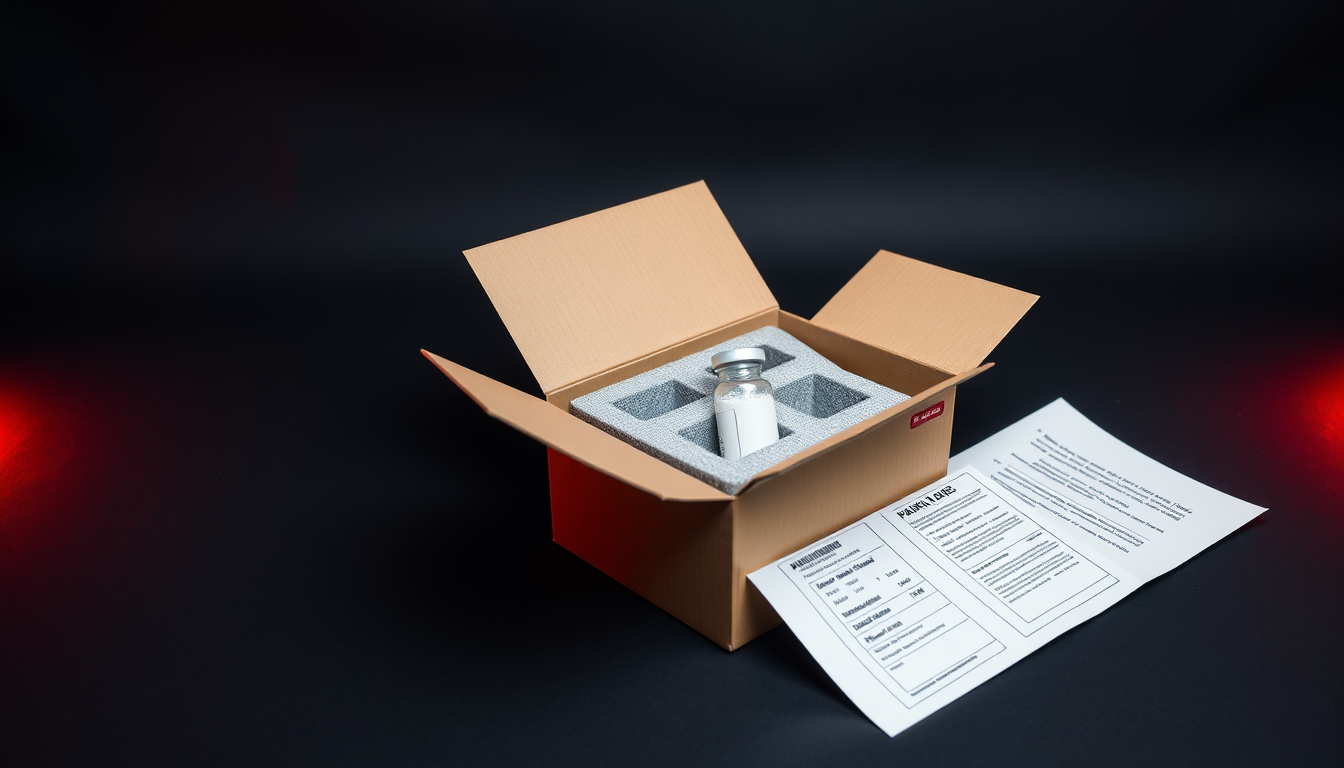
Research peptides ship as freeze-dried powders in sealed glass vials, seated in a protective insert, inside a plain corrugated carton with a packing slip that lists each product and its lot number. Lyophilized peptides are shipped this way because the dry solid state slows every major chemical degradation pathway, so a two-day ambient journey in a well-insulated box is a small fraction of the powder's stability budget. Cold packs are added when a format or a season calls for them, and the outer carton carries nothing that describes what is inside. On arrival, the receiver counts vials, matches lot numbers to the posted certificates, inspects seals and cakes, and logs the receipt.
Each of those steps has a reason behind it, and most of the reasons come from the stability literature on solid-state proteins and peptides rather than from shipping lore. The sections below take them in order, from the pick list to the lab notebook entry.
Why a lyophilized powder tolerates transit: the solid-state stability argument
A peptide degrades through a handful of chemical routes, including deamidation of asparagine and glutamine residues, oxidation of methionine and cysteine, hydrolysis at aspartate-proline bonds, and aggregation, and every one of them runs far more slowly in a dry solid than in solution. Lai and Topp's 1999 review in the Journal of Pharmaceutical Sciences laid out the chemistry of solid-state degradation and showed that residual moisture and molecular mobility, not temperature alone, control the rate. Wang's 2000 review in the International Journal of Pharmaceutics covered the lyophilization process end to end and the formulation factors that produce a stable cake. Carpenter and colleagues' 1997 Pharmaceutical Research paper set out practical rules for designing lyophilized formulations that survive storage, and Manning and colleagues updated the whole field in 2010.
The practical consequence is that a sealed, dry vial is tolerant of the ambient temperature swings that a carrier network produces over one to three days, provided moisture stays out and the vial stays intact. The regulatory stability framework reflects this: the ICH Q1A(R2) guideline adopted by the FDA defines harmonized long-term and accelerated storage conditions across climatic zones, and the data generated under it is how manufacturers set a labeled storage condition and shelf life for a dry product. A short ambient excursion during transit is a known quantity inside that framework, which is why most lyophilized peptides ship without refrigeration and why the question of whether a peptide needs cold-chain shipping usually has a format-specific rather than a universal answer.
From the pick list to the sealed carton
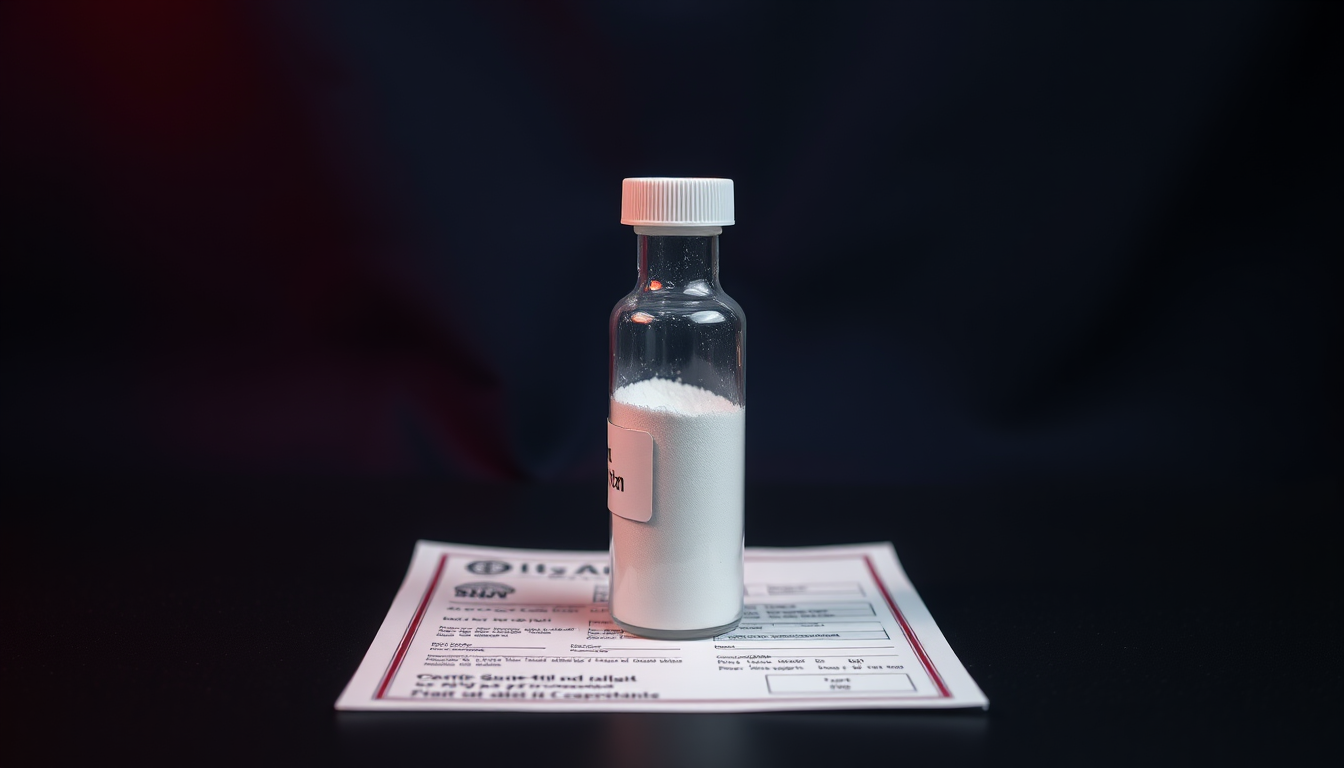
Packing starts with verification, not with tape. The pick list is matched to the order, and each vial's label is matched to the lot number that appears on the posted certificate of analysis for that product. At US Prime Peptides, lot-matched certificates are posted on the product page before purchase, so the packing slip's lot numbers and the certificates the buyer already saw should agree; a mismatch at this stage stops the pack. A vial is inspected for an intact crimp and stopper and for a cake that looks the way a freeze-dried cake should, whether a solid white plug, a loose powder, or a thin film, all of which are normal and all of which are discussed in our article on how the vial, stopper, and seal protect the powder.
Vials then go into a protective insert, typically closed-cell foam or molded pulp with individual wells, so that glass cannot contact glass and the vial cannot migrate during handling. The insert sits in a corrugated carton sized so there is no void space. A packing slip goes in with the products, listing each item, its labeled mass, its lot number, and the research-use-only statement. Lab supplies ordered alongside vials, such as bacteriostatic water or a reconstitution kit, are packed in the same carton with their own cushioning. The carton is sealed, weighed, and labeled with the carrier label and the shipper's return address only.
Temperature in transit: what the carriers themselves specify
Carrier guidance is written for perishables generally, but it is the most concrete public reference for what a package experiences in the network. FedEx's perishables page advises an insulated foam container with walls at least 1.5 inches thick inside a sturdy outer box, and states that gel coolants hold products between 34 degrees F (1 degrees C) and 50 degrees F (10 degrees C); it reserves dry ice for items that must stay frozen, notes that dry ice is a hazardous material with its own paperwork, and recommends that packaging and refrigerant protect contents for at least 24 hours beyond the delivery commitment time. It also recommends overnight service levels for anything temperature-sensitive and shipping early in the week to avoid weekend dwell.
For a lyophilized vial, the question is whether the product needs that gel-pack envelope at all. In most of the year, for most dry peptides, the answer is no, and an insulated carton on a two-day service is the right call; adding a gel pack to a dry powder can introduce condensation risk at the vial surface when the package is opened in a warm room. Aqueous formats are a different case: a liquid spray or a reconstituted solution has the full solution-phase degradation chemistry available to it, so those are assessed separately and may ship with coolant and tighter service. US Prime Peptides ships from the United States with 2-Day service included on orders, which keeps every package inside the window carriers themselves regard as routine for temperature-sensitive goods, and uses coolant where a format or a forecast warrants it rather than as a default for every box.
| Format | Usual transit packaging | Why |
|---|---|---|
| Lyophilized vial | Insulated carton, protective insert, no coolant in most conditions | Dry solid state; degradation pathways are slow; condensation is the larger risk |
| Liquid spray (aqueous) | Insulated carton; gel coolant and expedited service when conditions require | Solution-phase chemistry is active; carrier gel-pack range is 1 to 10 degrees C |
| Dissolving strips | Sealed pouch inside insulated carton; kept dry | Film matrix is moisture-sensitive; heat and humidity matter more than cold |
| Lab supplies (water, kits) | Standard cushioning in the same carton | Not temperature-sensitive over a transit window |
Discreet labeling and what the paperwork outside the box says
The outside of a research shipment should say as little as possible, and that is a matter of good practice rather than secrecy. The carton carries the carrier label, the shipper's name and return address, and the handling marks the carrier requires. It does not carry product names, compound names, or any description of contents. There are two reasons. The first is ordinary loss prevention: a plain carton attracts no attention on a loading dock or a porch. The second is regulatory hygiene: the research-use-only statement belongs on the product label and the packing slip, where it describes intended use, and nothing on the carton should suggest a different one.
Inside the box, the paperwork is deliberately complete. The packing slip identifies every item by name, labeled mass, and lot number, states that the contents are for research use only and not for human or veterinary use, and tells the receiver where the lot-matched certificate for each item can be found. That slip is the link between the physical vial and the analytical record. A laboratory's own document control depends on being able to trace a vial on the shelf back to the certificate that describes it, and our article on what a lot number is for explains how to keep that chain intact after the box is opened.
Transit times and what to check on arrival
Domestic ground and express networks deliver most research orders in one to three business days once the package leaves the shipper, and a two-day service removes the weekend dwell that most often extends a ground shipment. The receiver's job on arrival takes a few minutes and should be done before the vials go into storage. The table below is a reasonable receiving checklist for a laboratory.
| Check | What to look for | If it fails |
|---|---|---|
| Carton condition | No crushing, punctures, or water staining | Photograph before opening; note on the receipt log |
| Count and identity | Vial count and labels match the packing slip | Contact support with the order number and photos |
| Lot numbers | Each vial's lot matches the posted certificate | Do not use; contact support for the correct certificate or a replacement |
| Seal and stopper | Crimp intact, stopper seated, no cracks | Quarantine the vial; request a replacement |
| Cake appearance | White plug, loose powder, or film; some shift is normal | Discoloration or visible moisture warrants a support inquiry |
| Temperature on arrival | Contents at room temperature or cool; coolant status if present | Log it; a dry vial that is cool or at ambient is within expectations |
| Receipt log | Date, time, condition, lot numbers, storage location | This record is what a later audit will ask for |
Two literature points help calibrate expectations on the cake. Izutsu's 2018 chapter on freezing and freeze-drying in pharmaceutical formulations describes why cakes vary in appearance from lot to lot without any change in content, and Nguyen and colleagues' 2020 review in the Journal of Pharmaceutical Sciences explains how components can distribute unevenly within a dried solid, which is one reason a certificate reports measured net peptide content rather than relying on what the cake looks like. After the checks, vials go to the storage condition on the label; our storage and stability guide covers the choices from there.
Frequently Asked Questions
How are research peptides shipped?
Lyophilized peptides ship as sealed glass vials seated in a protective insert inside a plain insulated carton, with a packing slip listing each item and its lot number. Most dry vials ship at ambient temperature on a one-to-three-day service; aqueous formats may ship with gel coolant. The outside of the carton carries only the carrier label and return address.
Do peptides need to be refrigerated during shipping?
Dry lyophilized peptides generally do not, because the solid state slows the chemical degradation pathways that run in solution, and a short ambient transit is well within the stability margin established for freeze-dried products. Liquid formats are assessed separately. Carrier guidance puts gel coolants in the 1 to 10 degrees C range and recommends protecting contents for at least 24 hours beyond the delivery commitment.
What should I check when my peptide order arrives?
Check the carton for damage, count the vials against the packing slip, match each vial's lot number to the posted certificate of analysis, inspect the crimp and stopper, look at the cake, note the arrival temperature, and log the receipt with the date, condition, and storage location. Contact support with photos if anything does not match.
Why does the shipping box not say what is inside?
A plain carton reduces loss and theft and keeps the research-use-only statement where it belongs, on the product label and the packing slip. Carriers require only the shipping label, the shipper's return address, and any handling marks; product descriptions on the outside add risk and serve no purpose.
Citations
- FedEx. How to Ship Perishables (insulated container, gel coolant range, dry ice, service recommendations). fedex.com
- US FDA. Q1A(R2) Stability Testing of New Drug Substances and Products (ICH guidance, November 2003). fda.gov
- Lai MC, Topp EM. Solid-state chemical stability of proteins and peptides. J Pharm Sci. 1999;88(5):489-500. PMID 10229638
- Wang W. Lyophilization and development of solid protein pharmaceuticals. Int J Pharm. 2000;203(1-2):1-60. PMID 10967427
- Carpenter JF, Pikal MJ, Chang BS, Randolph TW. Rational design of stable lyophilized protein formulations: some practical advice. Pharm Res. 1997;14(8):969-975. PMID 9279875
- Manning MC, Chou DK, Murphy BM, Payne RW, Katayama DS. Stability of protein pharmaceuticals: an update. Pharm Res. 2010;27(4):544-575. PMID 20143256
- Izutsu KI. Applications of Freezing and Freeze-Drying in Pharmaceutical Formulations. Adv Exp Med Biol. 2018;1081:371-383. PMID 30288720
- Nguyen KTT, Frijlink HW, Hinrichs WLJ. Inhomogeneous Distribution of Components in Solid Protein Pharmaceuticals: Origins, Consequences, Analysis, and Resolutions. J Pharm Sci. 2020;109(1):134-153. PMID 31606540
This article is for laboratory research reference only. US Prime Peptides products are supplied strictly for in vitro research. Not for human consumption.
Related research
- Do Lyophilized Peptides Need Cold-Chain Shipping?
- Why a Second Laboratory Matters: Independent Testing vs Manufacturer Certificates
- How to Vet a Research Peptide Vendor: A 12-Point Checklist
- What 'Research Use Only' Actually Means on a Peptide Label
- Are Research Peptides Legal in the United States? What the Rules Actually Say
Compliance Notice: US Prime Peptides products are supplied strictly for laboratory and academic research purposes only. They are not intended for human or veterinary consumption, diagnosis, treatment, or prevention of any disease. All content on this page is educational in nature and does not constitute medical advice or product claims. Researchers are responsible for handling these compounds in accordance with their institution’s safety protocols and applicable laws.