Research-use-only context. This article summarizes published third-party scientific literature and laboratory practice. It is not medical advice, not a therapeutic or performance claim, and not a usage guide. US Prime Peptides products are supplied strictly for in vitro laboratory research and are not for human or veterinary use.
The endotoxin line on a certificate reads something like "< 0.5 EU/mg, USP <85>, kinetic chromogenic". This article explains what endotoxins are, how the compendial Limulus amebocyte lysate (LAL) test and its recombinant successors detect them, what the units mean and why they are expressed per milligram for a powder, and what a passing result does and does not establish about a lot.
What endotoxins are
Endotoxins are lipopolysaccharides (LPS) from the outer membrane of Gram-negative bacteria. Each LPS molecule has a hydrophobic lipid A anchor, a core oligosaccharide, and a variable O-antigen polysaccharide chain; lipid A is the part that innate immune receptors recognize, and its structure varies between species. LPS is shed during cell division, membrane vesicle release, and cell death, so it accumulates in any aqueous system that has hosted Gram-negative growth, including water used in purification, even after the bacteria themselves are gone.
Two properties make endotoxin a separate test from sterility. It is heat-stable and survives filtration and standard sterilization, as a 2016 review by Fennrich and colleagues in Alternatives to Laboratory Animals summarized in its account of seventy years of pyrogen testing. And it is active at picogram quantities, which is why a sterile-by-culture solution can still fail an endotoxin test. The sterility test, discussed in sterility testing (USP <71>), asks whether viable organisms are present; the endotoxin test asks whether their molecular residue is.
The compendial test: USP <85>
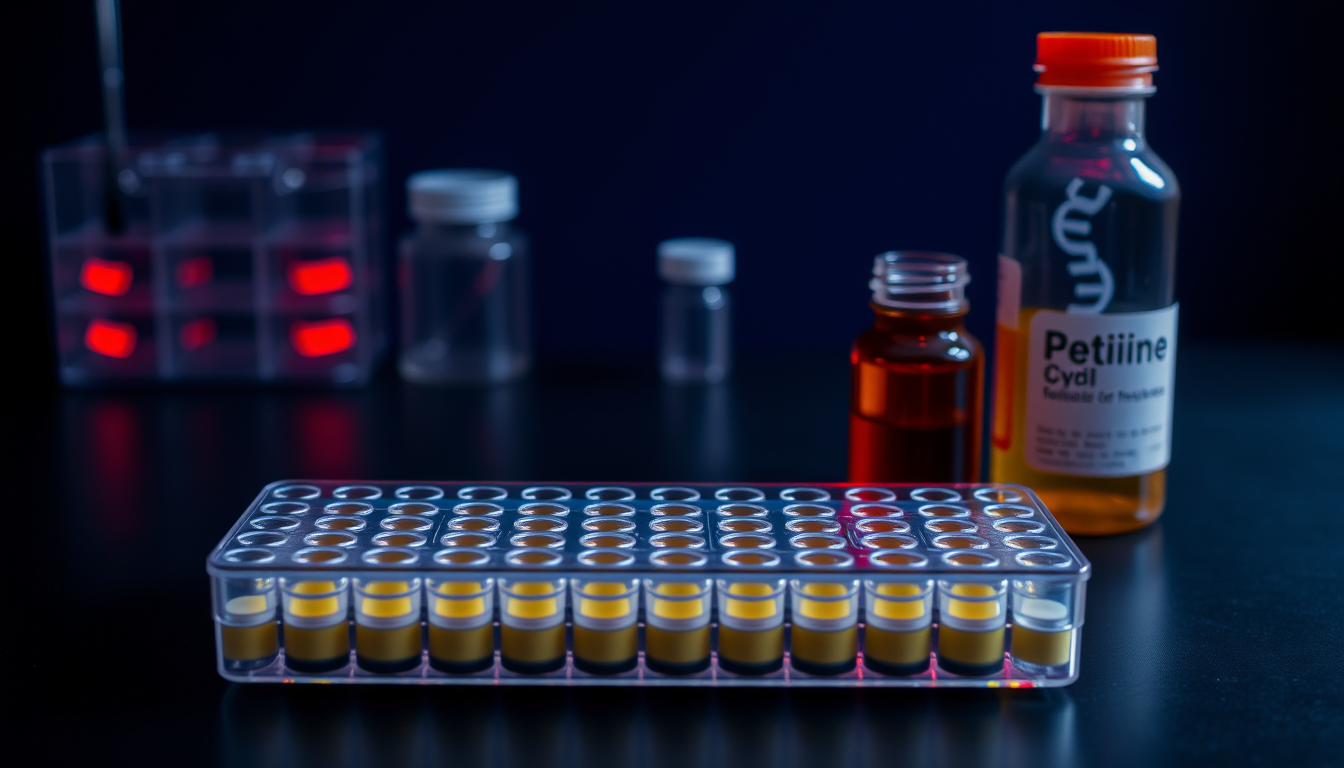
USP General Chapter <85> Bacterial Endotoxins Test describes three techniques that all rely on amebocyte lysate from the horseshoe crab (Limulus polyphemus or Tachypleus tridentatus). Endotoxin activates a clotting cascade in the lysate, and each technique reads a different endpoint. The chapter is harmonized with the European and Japanese pharmacopoeias, and FDA's current guidance on pyrogen and endotoxins testing defers to it and to USP <161> for methods and limit calculations, having withdrawn its own 1987 LAL guideline.
| Technique | Endpoint read | Output | Typical role |
|---|---|---|---|
| Gel-clot | Formation of a firm gel that stays in place when the tube is inverted | Pass/fail at the reagent's labeled sensitivity (limit test) or a semi-quantitative dilution series | The referee method: USP <85> and FDA state that in a dispute the gel-clot result decides unless the monograph says otherwise |
| Turbidimetric | Increase in turbidity as the clotting enzyme cleaves its substrate, read as an endpoint or kinetically | Quantitative, against a standard curve | Routine quantitative release testing |
| Chromogenic | Color development as the enzyme cleaves a synthetic peptide-chromogen substrate | Quantitative, against a standard curve | Routine quantitative release testing; "kinetic chromogenic" is the most common entry on peptide certificates |
Every run is calibrated against a reference standard endotoxin or a control standard endotoxin traced to it, and the chapter requires that the test be carried out in a way that avoids introducing endotoxin from glassware, water, or reagents. The companion information chapter USP <1085> provides background on applying these methods. The LAL test has its own long history: Liebsch's 1995 account in ALTEX describes the twenty-five to thirty years of validation it took to replace the rabbit pyrogen test, and FDA notes that it first described conditions for LAL as a finished-product test in a 1977 Federal Register notice.
Recombinant Factor C and USP <86>
Recombinant Factor C (rFC) is the endotoxin-sensing protein of the horseshoe crab cascade produced by recombinant expression, so no animal blood is used. In an rFC assay, endotoxin activates the single recombinant enzyme, which cleaves a fluorogenic substrate; the fluorescence is read against a standard curve. Because only Factor C is present, the assay does not respond to (1,3)-beta-D-glucans, which can trigger the Factor G pathway in natural lysate and produce false-positive signals. Recombinant cascade reagents, which reconstitute all three enzymes of the pathway, are a second non-animal option.
USP General Chapter <86> Bacterial Endotoxins Test Using Recombinant Reagents describes both rFC and recombinant cascade methods. USP states that <86> is not currently an "applicable" chapter under its General Notices, meaning it applies only where a monograph specifies it, and that its tests are considered alternative tests. FDA's guidance says firms may use alternative assays if they are validated along the lines of USP <1225> and shown to give equivalent or better results, with the gel-clot method remaining the referee.
The equivalence evidence is substantial. Bolden and Smith, in the PDA Journal of Pharmaceutical Science and Technology in 2017, reported validation of an endpoint fluorescence rFC method on several pharmaceutical products with results equivalent or superior to the compendial test. Piehler and colleagues, writing in Microorganisms in 2020, compared LAL and rFC across a proficiency test program running from 2014 to 2019 with unknown samples and changes of operator and reagent lot. Dubczak and colleagues, in the European Journal of Pharmaceutical Sciences in 2021, compared LAL from two suppliers against three rFC reagents and a recombinant cascade reagent on pharmaceutically relevant water samples to assess detection specificity across environmental endotoxins. Abate and colleagues, in the Journal of Medical Microbiology in 2017, found that rFC detected most LPS structural variants at picogram levels and matched LAL for E. coli and Salmonella LPS, while reactivity to some species differed between assays. Tindall and colleagues' 2021 BioTechniques review summarized this body of work as showing rFC and LAL to be equivalent.
Units: EU, EU/mL, and EU/mg
The endotoxin unit (EU) is a unit of biological activity defined against the reference standard endotoxin, and it is numerically equal to the international unit (IU). Because LPS from different species has different potency per unit mass, activity rather than mass is the only sensible way to express a limit. An assay reports a concentration in EU/mL for the solution it measured. Converting that to a per-mass figure for a powder requires knowing how much powder was dissolved in how much diluent.
| Quantity | How it is obtained | Example |
|---|---|---|
| Assay result (EU/mL) | Read from the standard curve for the test solution, corrected for dilution | 0.8 EU/mL |
| Sample concentration (mg/mL) | Mass of powder dissolved divided by diluent volume | 10 mg in 5 mL = 2 mg/mL |
| Result per mass (EU/mg) | EU/mL divided by mg/mL | 0.8 / 2 = 0.4 EU/mg |
| Result per vial (EU/vial) | EU/mg multiplied by the labeled fill | 0.4 × 10 = 4 EU per 10 mg vial |
Limits for a lyophilized research material are expressed per milligram because the vial is a mass, not a volume, and the figure must stay meaningful regardless of how much diluent a laboratory later adds. For approved drug products, pharmacopeial limits are instead derived from a threshold constant divided by the maximum amount of product per kilogram of body mass in an hour; that calculation is written for drug-product release and is not how a research-use-only specification is set. Here "mg" is a label mass and "EU/mg" an activity per unit mass; neither has anything to do with amounts taken by anyone.
Interference, maximum valid dilution, and low endotoxin recovery
A valid result requires that the sample itself does not inhibit or enhance the reaction. USP <85> addresses this with a test for interfering factors, in which a known endotoxin spike is added to the sample and must be recovered within 50% to 200%. If the undiluted sample interferes, it may be diluted, but only up to the maximum valid dilution (MVD), the greatest dilution at which the limit can still be detected at the reagent's sensitivity. FDA's guidance adds that a failure observed below the MVD may be repeated at a greater dilution not exceeding the MVD, with the original failure recorded, while an out-of-specification result at the MVD that cannot be attributed to testing error means the lot is rejected.
Low endotoxin recovery (LER) is a more subtle problem. In some formulations, especially those containing chelators and polysorbate surfactants, endotoxin spiked into the undiluted product becomes undetectable over hold time, even though it is still present. Gorman and Golovanov's 2022 review in the European Journal of Pharmaceutics and Biopharmaceutics attributes the effect to excipient interactions that disrupt the supramolecular aggregates of LPS that the lysate recognizes. Reich and colleagues, in the International Journal of Molecular Sciences in 2019, examined hold-time studies with purified endotoxin, crude bacterial extracts, and naturally occurring contamination, showing that the choice of spiking material changes whether masking is observed. For a plain lyophilized peptide reconstituted in water, LER is unlikely, but the interference test is still what makes the reported number trustworthy.
Reading the endotoxin line and what a pass means
A complete endotoxin line names the chapter (<85> or <86>), the technique, the reagent sensitivity or the standard curve range, the limit, the result, and a statement that the interference controls were valid. A pass means that, in the sample drawn from this lot and dissolved as described, endotoxin activity was below the stated limit with controls in range. It does not mean the lot is sterile, it does not cover non-endotoxin pyrogens such as Gram-positive cell wall components, and it does not describe any individual sealed vial that was not opened.
It is worth remembering that the result is also reagent-dependent at the margins. Proficiency programs such as the one Piehler and colleagues reported exist because lysate lots, operators, and laboratories introduce variation, and the gel-clot referee rule in USP <85> exists because quantitative methods can disagree. The endotoxin line is one of six on a standard panel, and how it sits beside identity, purity, content, sterility, and metals is covered in how to read a peptide certificate of analysis.
Frequently Asked Questions
What is the LAL test for endotoxin?
The Limulus amebocyte lysate test uses a clotting cascade extracted from horseshoe crab blood cells that is triggered by bacterial endotoxin. USP <85> describes three versions: gel-clot, which gives a pass/fail at a labeled sensitivity, and turbidimetric and chromogenic methods, which quantify endotoxin against a standard curve in endotoxin units.
What does EU/mg mean on a peptide certificate?
EU/mg is endotoxin activity per milligram of powder. The laboratory dissolves a known mass of the lot in a known volume, measures EU/mL, and divides by the concentration in mg/mL. Expressing the limit per milligram keeps it meaningful regardless of how much diluent a laboratory later adds to the vial.
Is recombinant Factor C accepted instead of LAL?
USP <86> describes recombinant Factor C and recombinant cascade methods, and the European Pharmacopoeia has a comparable chapter. In the USP system <86> is an alternative method that must be validated for the product and shown equivalent to <85>, and in a dispute the gel-clot LAL result is still the referee. Published comparisons report the two as equivalent.
Does passing an endotoxin test mean a peptide is sterile?
No. Endotoxin and sterility are independent tests. A solution can contain no viable organisms and still carry endotoxin from bacteria that are no longer present, and a solution can pass an endotoxin test while harboring Gram-positive organisms or fungi that produce no LPS. A certificate should carry both results.
Citations
- United States Pharmacopeia. General Chapter <85> Bacterial Endotoxins Test: Notice of Adoption of Harmonized Standard. USP-NF. usp.org/node/10566
- United States Pharmacopeia. General Chapter <86> Bacterial Endotoxins Test Using Recombinant Reagents. USP-NF. doi.usp.org/USPNF/USPNF_M16015_02_01.html
- United States Pharmacopeia. General Chapter <1085> Guidelines for Bacterial Endotoxins Testing. USP-NF. doi.usp.org/USPNF/USPNF_M2245_04_01.html
- FDA. Pyrogen and Endotoxins Testing: Questions and Answers, Guidance for Industry (Edition 2). fda.gov
- Fennrich S, Hennig U, Toliashvili L, Schlensak C, Wendel HP, Stoppelkamp S. More than 70 years of pyrogen detection: Current state and future perspectives. Altern Lab Anim. 2016;44:239-253. PMID 27494624
- Liebsch M. History of the LAL-test: validation and regulatory acceptance. ALTEX. 1995;12:76-80. PMID 11178419
- Bolden J, Smith K. Application of Recombinant Factor C Reagent for the Detection of Bacterial Endotoxins in Pharmaceutical Products. PDA J Pharm Sci Technol. 2017;71:405-412. PMID 28733334
- Piehler M, Roeder R, Blessing S, Reich J. Comparison of LAL and rFC Assays: Participation in a Proficiency Test Program between 2014 and 2019. Microorganisms. 2020;8(3):418. PMID 32188126
- Dubczak J, Reid N, Tsuchiya M. Evaluation of limulus amebocyte lysate and recombinant endotoxin alternative assays for an assessment of endotoxin detection specificity. Eur J Pharm Sci. 2021;159:105716. PMID 33454378
- Abate W, Sattar AA, Liu J, Conway ME, Jackson SK. Evaluation of recombinant factor C assay for the detection of divergent lipopolysaccharide structural species and comparison with Limulus amebocyte lysate-based assays and a human monocyte activity assay. J Med Microbiol. 2017;66:888-897. PMID 28693666
- Tindall B, Demircioglu D, Uhlig T. Recombinant bacterial endotoxin testing: a proven solution. Biotechniques. 2021;70:290-300. PMID 33956506
- Gorman A, Golovanov AP. Lipopolysaccharide Structure and the Phenomenon of Low Endotoxin Recovery. Eur J Pharm Biopharm. 2022;180:289-307. PMID 36272656
- Reich J, Weyer FA, Tamura H, Nagaoka I, Motschmann H. Low Endotoxin Recovery: Masking of Naturally Occurring Endotoxin. Int J Mol Sci. 2019;20(4):838. PMID 30781342
This article is for laboratory research reference only. US Prime Peptides products are supplied strictly for in vitro research. Not for human consumption.
Related research
- How to Vet a Research Peptide Vendor: A 12-Point Checklist
- What a Lot Number Is For, and How to Match a Vial to Its Certificate
- Net Peptide Content vs Purity: Why a 99% Pure Vial Can Hold Less Peptide Than You Think
- HPLC Purity: What 'Area Percent' Does and Does Not Tell You
- How to Read a Peptide Certificate of Analysis, Line by Line
Compliance Notice: US Prime Peptides products are supplied strictly for laboratory and academic research purposes only. They are not intended for human or veterinary consumption, diagnosis, treatment, or prevention of any disease. All content on this page is educational in nature and does not constitute medical advice or product claims. Researchers are responsible for handling these compounds in accordance with their institution’s safety protocols and applicable laws.